
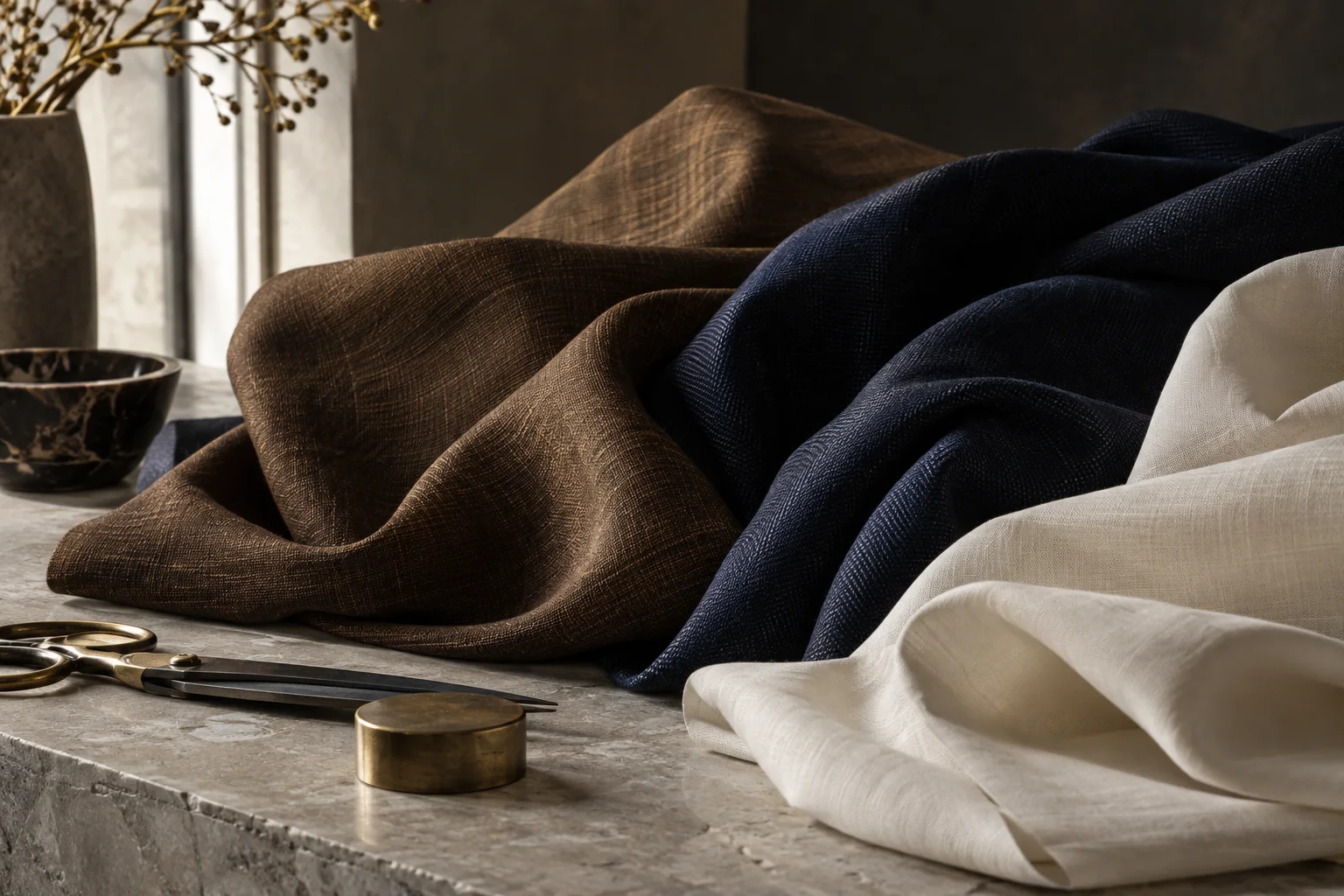
Why Fabric Matters
Read beyond the label
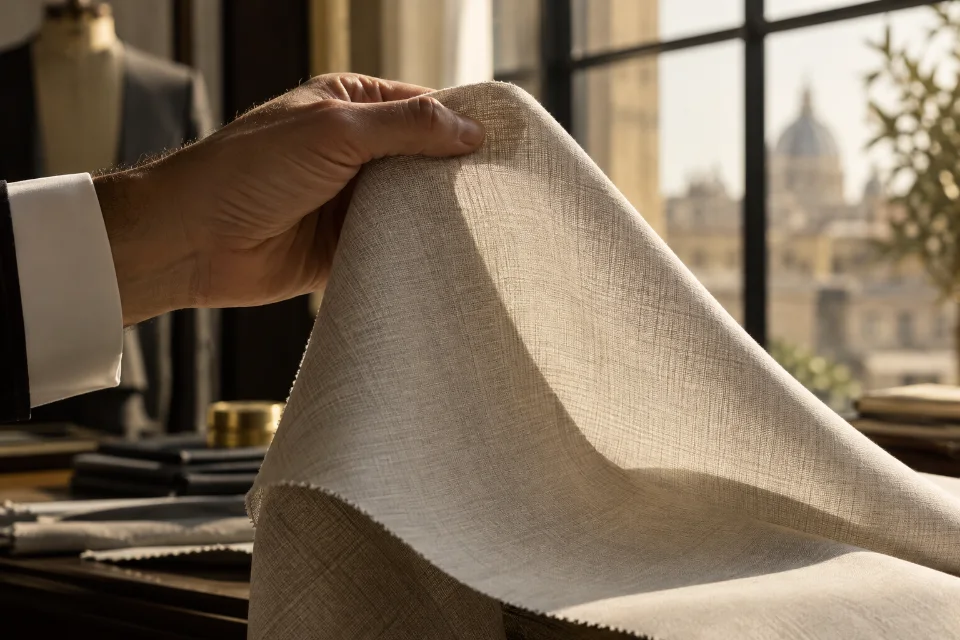
A fibre name does not tell the whole story. Two wool cloths can feel quite different because of their yarn, weave, weight and finish. Ask to see a larger length where possible. Hold it, fold it gently and notice how it falls. A useful question is how this particular cloth will behave in the garment you are considering. Treat descriptions and numbers as part of the conversation, alongside your own response to the material.
Craft / Note 02
Think about the actual day
In Kuala Lumpur, an outfit may move between outdoor heat and cool interiors several times. Consider those transitions when discussing cloth and construction. A fabric that feels appealing in a swatch also needs to suit the cut and intended use. Tell the tailor how often you expect to wear it and whether it will travel. Ask about creasing and care before deciding, especially if you are drawn to an unfamiliar texture.
Craft / Note 03
Enjoy the character
Linen develops visible creases in wear, while a textured wool may make a plain colour feel richer. Decide whether those characteristics suit your taste rather than treating them as surprises after purchase. View the cloth beside the shirts and shoes you own. Look at it from a few steps away as well as close up. The fabric should make sense as a whole garment, not only as an attractive square in a sample book.
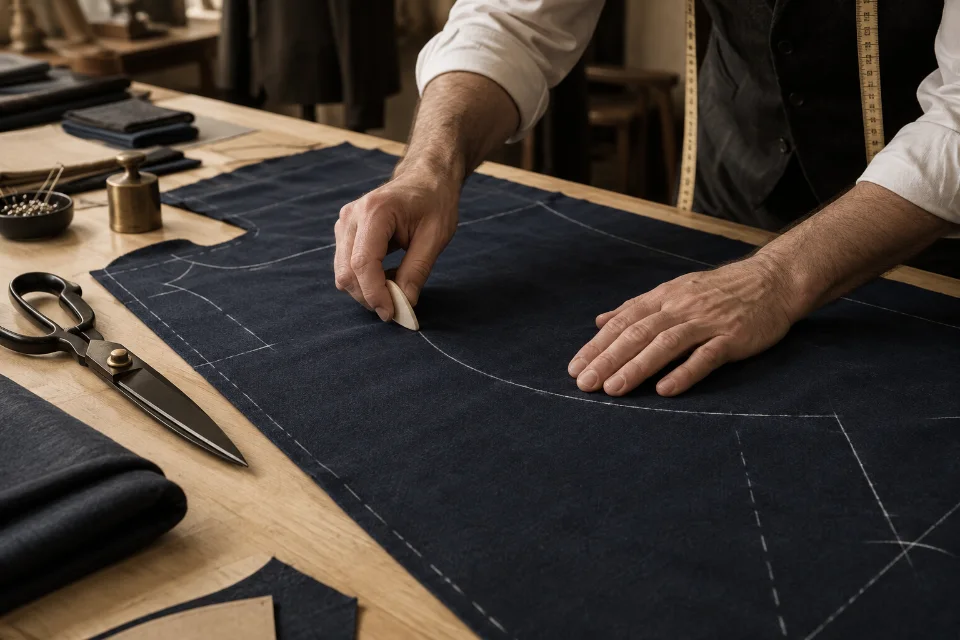
Cloth, close enough to read
Texture and drape reveal themselves differently in folds, in direct light and across a finished garment.

Questions to bring to the table
Use the swatch to begin a conversation about how the finished garment will live.
Weight & setting
Describe the season, room temperature and occasions you have in mind. Ask why the tailor considers a particular cloth suitable for those conditions.
Detail 02
Texture & pairing
Place the cloth beside your usual shirt colours. Texture can provide enough interest on its own, particularly when the rest of the outfit is simple.
Detail 03
Care & frequency
Discuss cleaning and storage before committing. The right cloth should fit both your preferred appearance and the routine you can realistically maintain.
A better way to choose cloth
Slow the selection down enough to notice what a small swatch can and cannot tell you.
Begin with touch
Feel several options without rushing to name a favourite. Compare texture and weight, and ask which differences will remain noticeable in a finished garment.
See a larger area
A stripe or check reads differently across a jacket. Ask to view more of the cloth and step back to judge the scale and contrast of the pattern.
Bring the outfit together
Place the cloth near the shirt and footwear colours you plan to use. Look in daylight where possible, since the workroom lighting may change how a colour appears.
Confirm how it will be worn
Explain frequency of wear, travel and care expectations. Confirm that the proposed construction works with the cloth before the final decision is made.
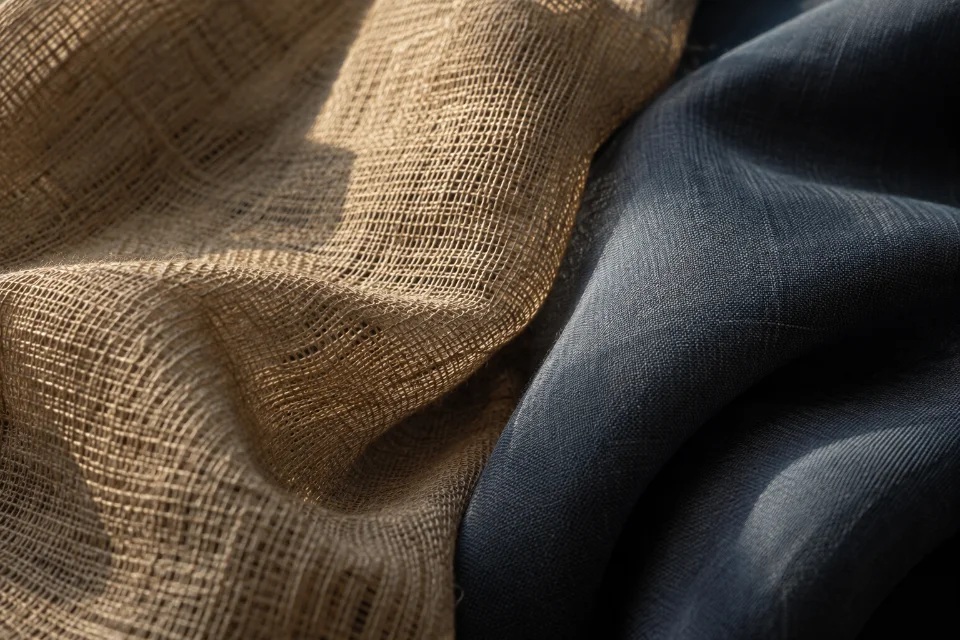
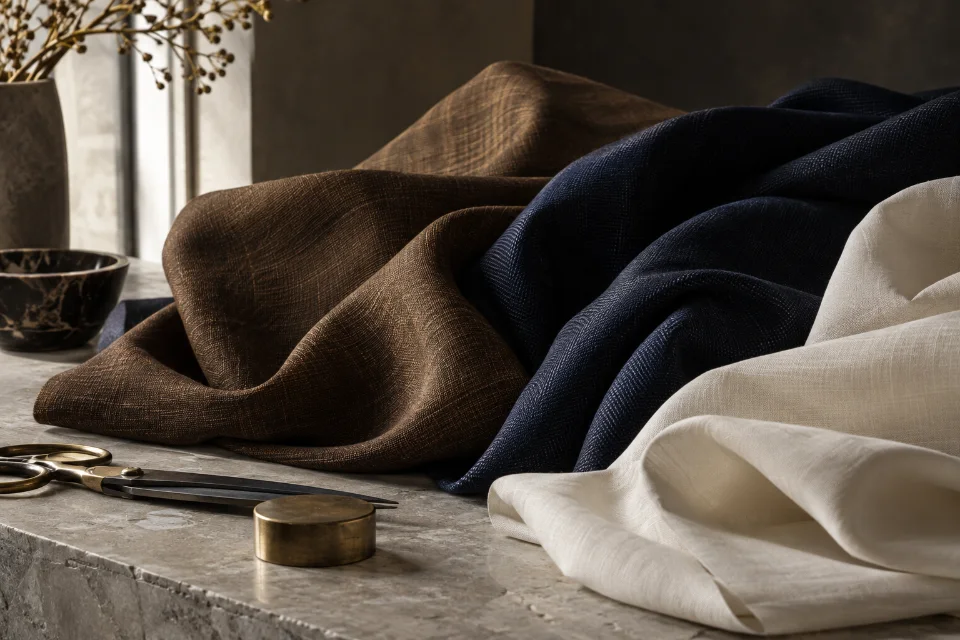
Texture at two distances
Scroll between an intimate view of the weave and a broader arrangement of cloth. The closer view explains texture; the wider view reveals how colour and drape work together.