
The Power of Personal Style
Begin with what gets worn
Look through a normal fortnight rather than an imagined ideal weekend. How much time do you spend at a desk, walking outside or travelling between appointments? Which clothes work across those settings? Set aside the pieces you seldom wear and ask why. Sometimes the colour is difficult to combine; sometimes the fit asks for too much adjustment. This small wardrobe audit gives you a useful brief before you add anything new.
Style / Note 02
Choose a consistent outline
Proportion often makes an outfit feel coherent before colour does. A fuller trouser can balance a relaxed jacket; a shorter jacket changes how the legs read. Try combinations in a full-length mirror with your usual footwear. Keep the ones in which you stand naturally. There is no need to force every garment into one silhouette, but recognising your preferred outline makes future decisions less uncertain.
Style / Note 03
Leave room for personality
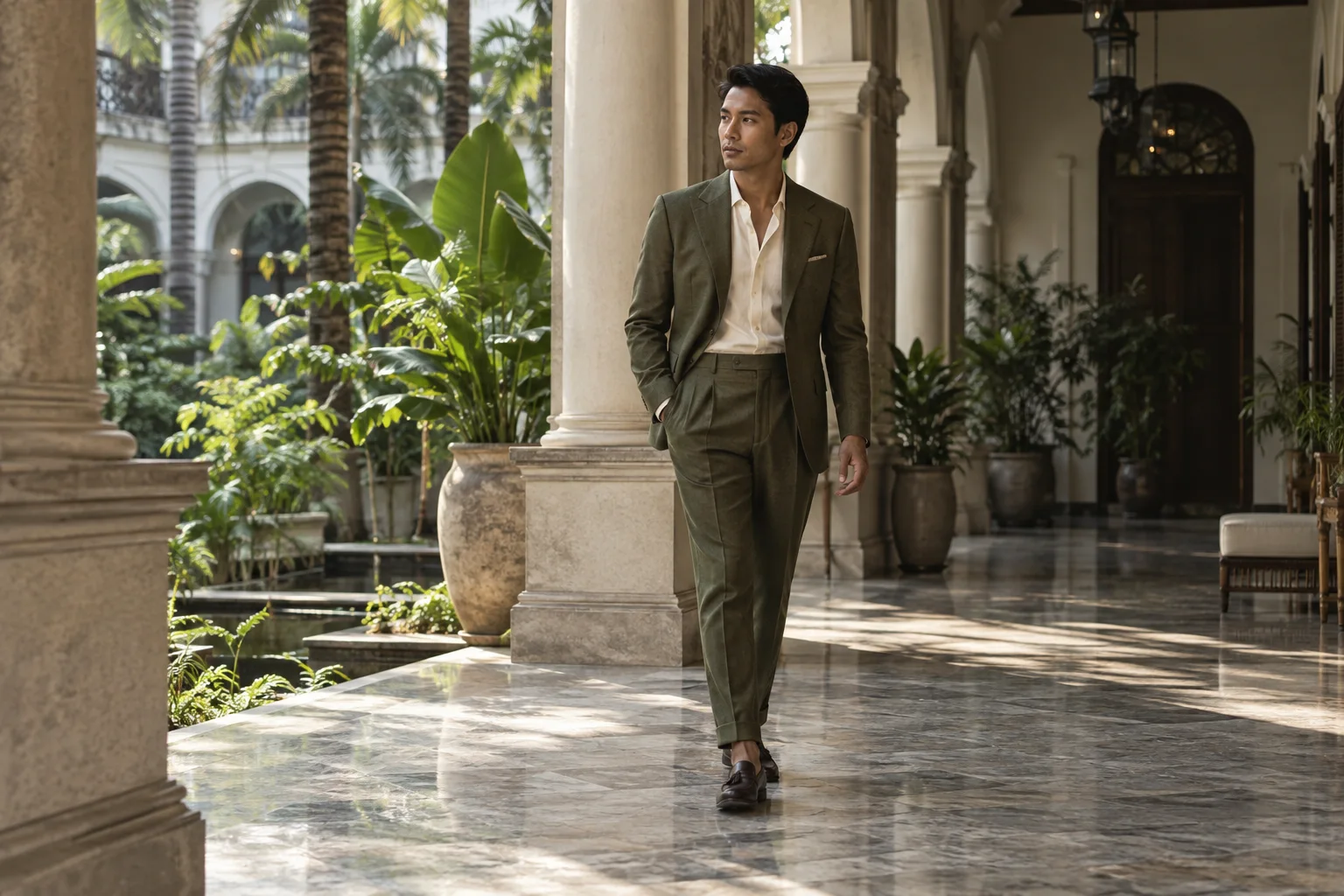
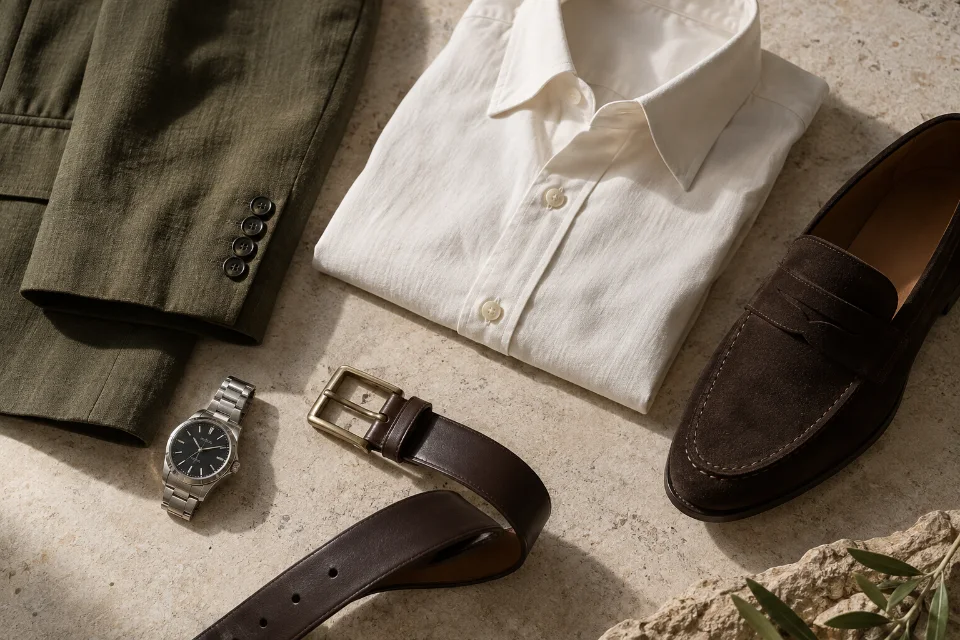
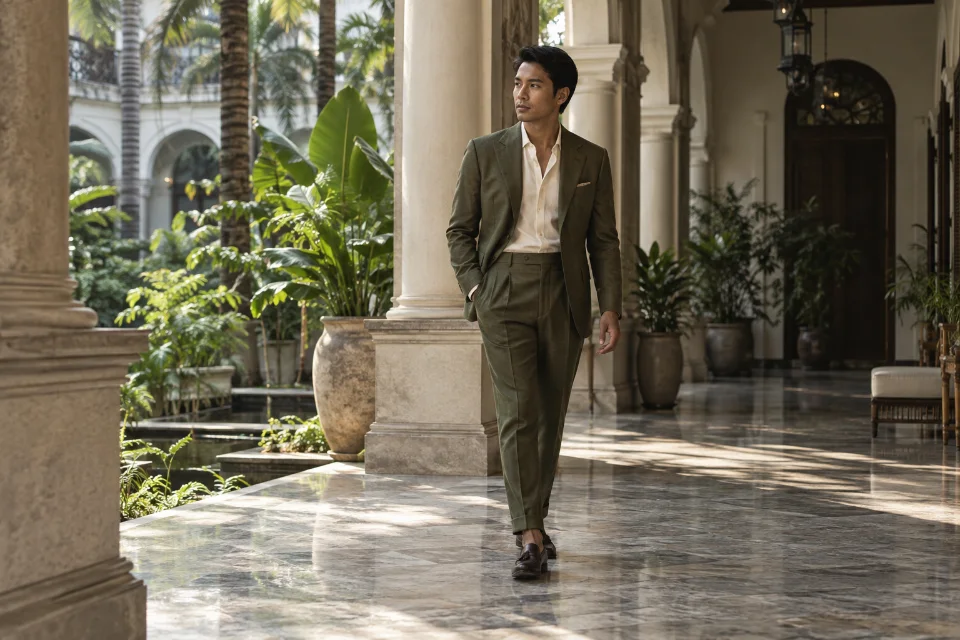
A restrained wardrobe still has room for pleasure. You might enjoy textured cloth, an open collar or a particular shade of brown. Let one preference lead and give it enough space. An olive jacket can sit comfortably with a plain ivory shirt and dark shoes. If you feel compelled to adjust an accessory all day, leave it out next time. Confidence often grows from familiarity with an outfit rather than its novelty.
A wardrobe in context
Tailoring on the street, at a café and among the pieces that make it useful.

Three decisions worth repeating
A few clear preferences can make getting dressed feel much simpler.
Useful colour
Choose colours that already work with your shirts and shoes. Judge them together in daylight, rather than treating each new piece as a separate purchase.
Detail 02
Comfortable proportion
Keep photographs of outfits you enjoyed wearing, including the shoes. Use them to describe the shapes you like instead of relying on a trend name.
Detail 03
A personal detail
Repeat a detail because it feels like you. A particular collar, cloth texture or trouser shape can become familiar without turning into a uniform.
Find your own point of view
A practical wardrobe exercise to do with what you already own.
Start with five outfits
Write down five combinations you wore recently. Mark the ones you would happily repeat. Notice whether your favourites share a colour, a silhouette or simply a level of comfort.
Work with the strongest pieces
Build a few combinations around your most useful jacket and trousers. Try a different shirt before deciding you need a new jacket. A small change may be enough.
Change one thing
Experiment with one proportion or texture at a time. Wear the outfit through a real day so you can judge comfort and practicality alongside its appearance.
Keep what feels natural
Repeat the combinations that work. Over time, your preferences become easier to explain, whether you are dressing yourself or discussing a new garment with a tailor.
One point of view, different settings
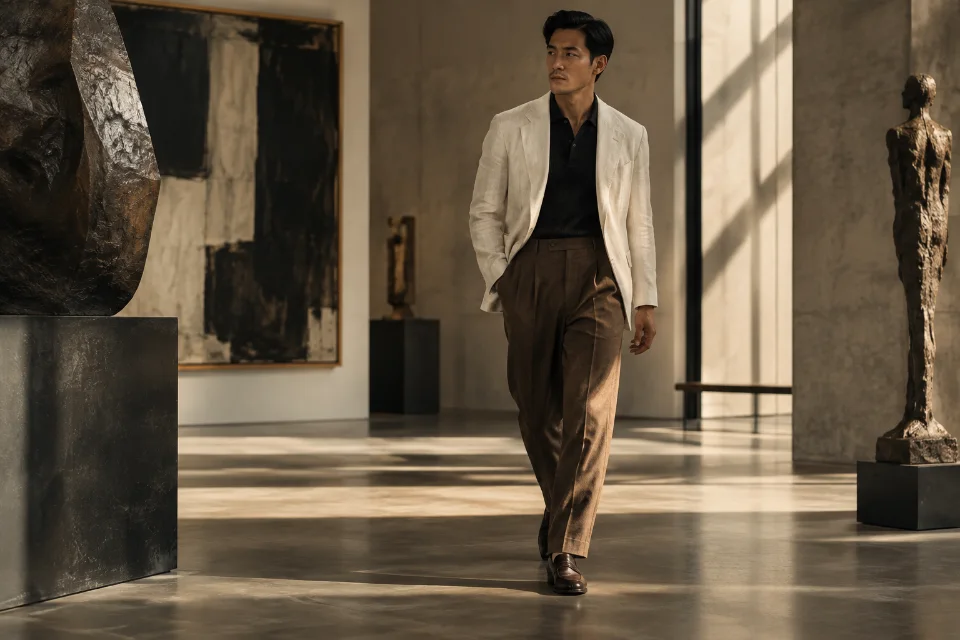
Scroll between a more composed daytime outfit and a relaxed café look. The useful connection is ease, proportion and a palette that feels familiar.