
The Anatomy of a Bespoke Suit
A pattern for a person
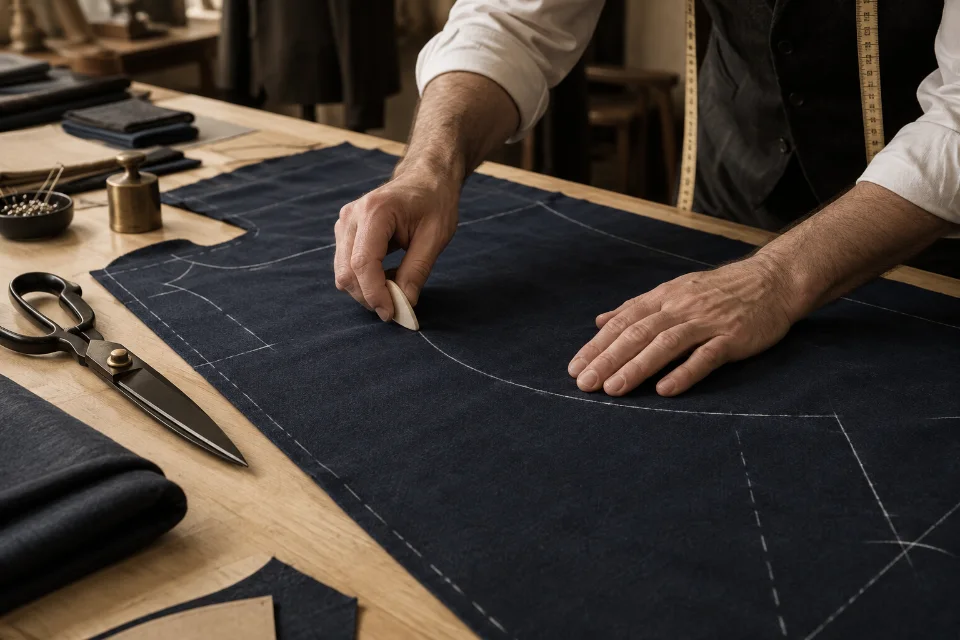
A tailor starts with measurements, but measurements alone do not describe posture. One shoulder may sit lower. A client may stand with their weight forward, or spend most of the day seated. These observations change the balance of the jacket and the way the trousers hang. The paper pattern records those decisions. At the fitting, the tailor checks them against the body again. A good question to ask is where the garment needs room to move, rather than how closely it can follow an outline.
Craft / Note 02
The structure you cannot see
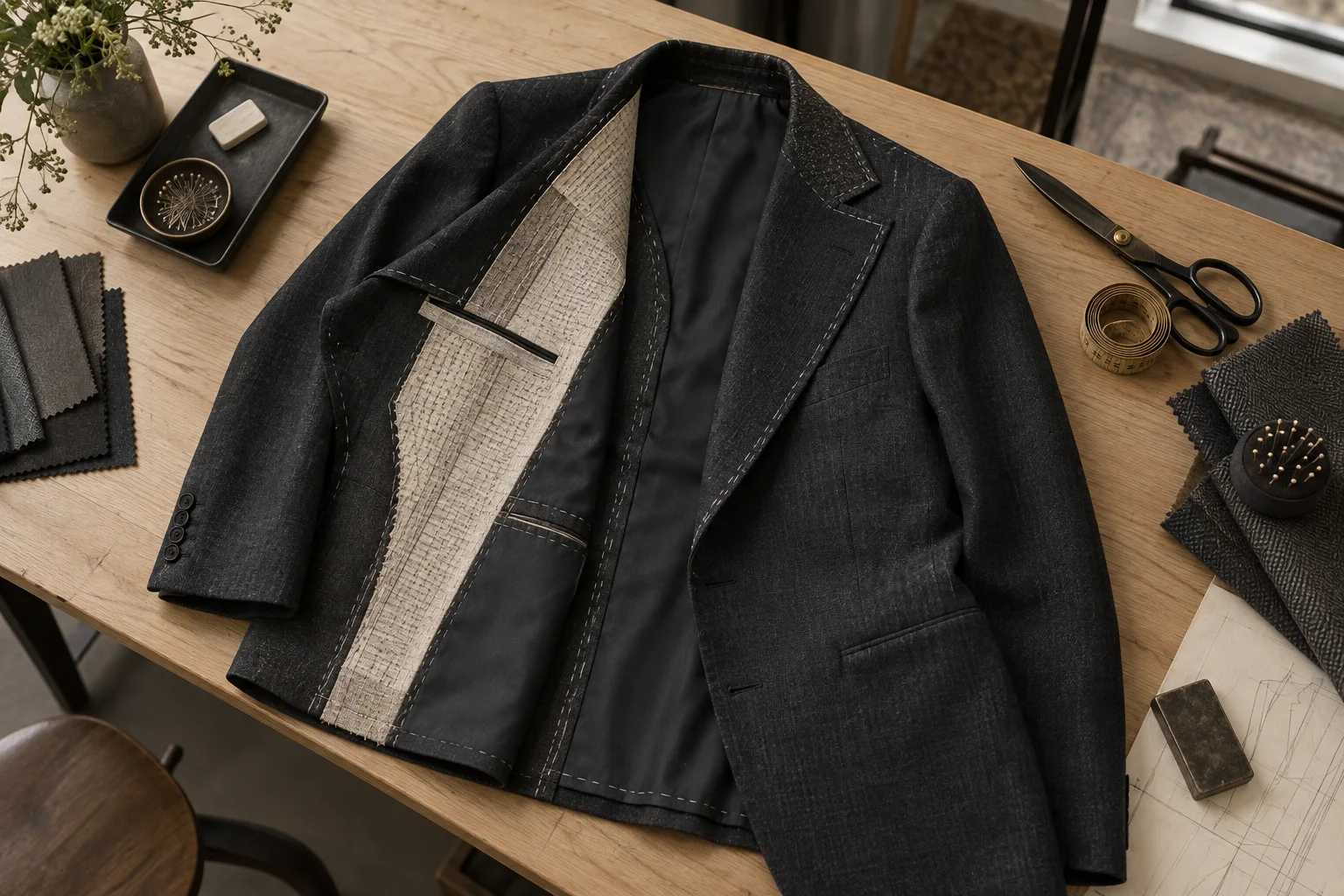
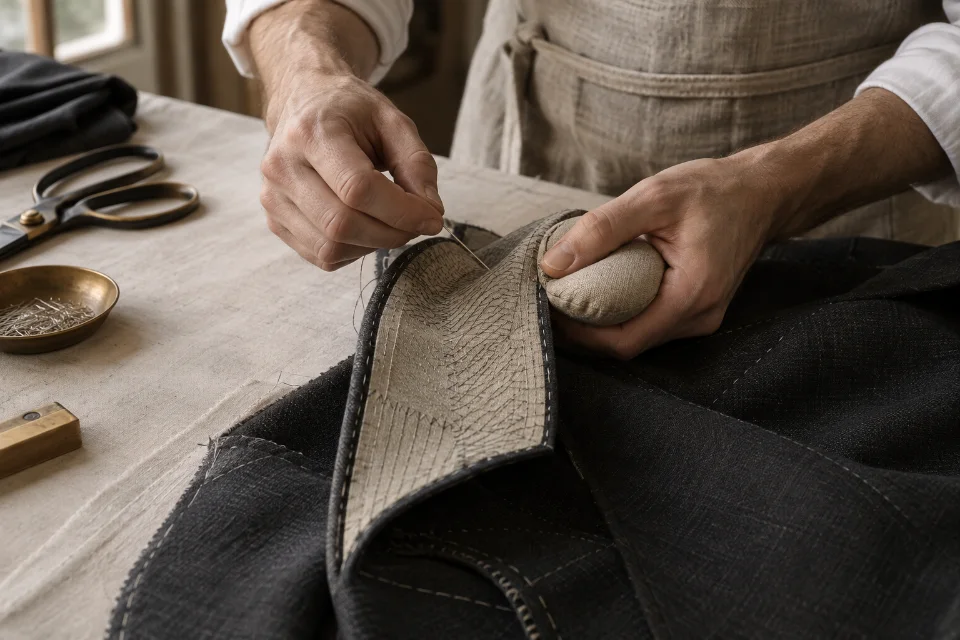
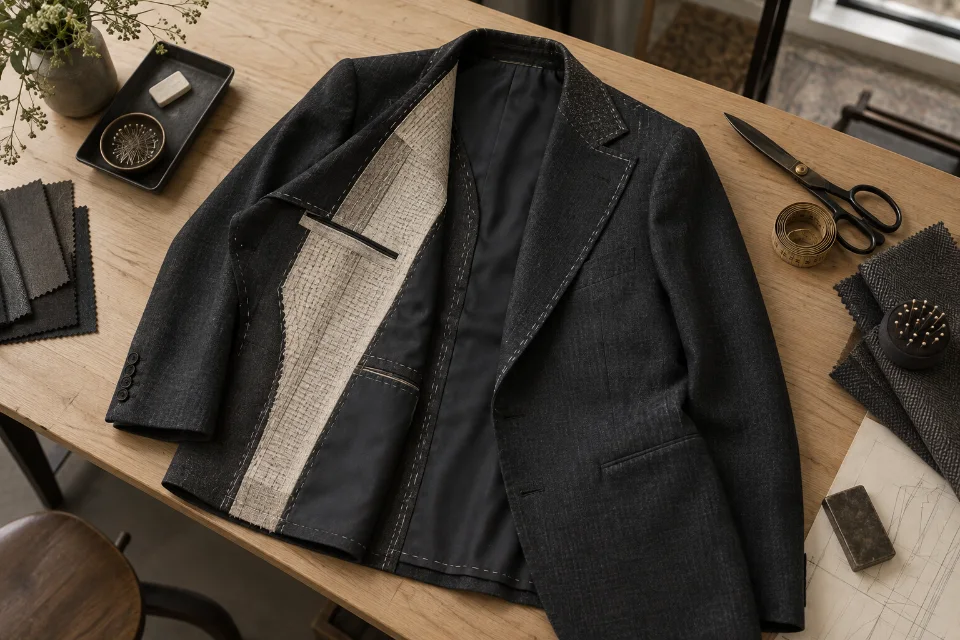
Inside a canvassed jacket, an interlining helps support the chest and shape the lapel. Its weight and the way it is worked affect the finished feel. The shoulder also needs a decision: a cleaner, more defined line or a softer expression. Neither is a universal answer. Match the structure to the cloth, the wearer and the intended setting. Small finishing details are worth enjoying, but they should sit on top of sound proportion and comfortable balance.
Craft / Note 03
Fit is a moving conversation
During a fitting, button the jacket, then sit, walk and reach as you normally would. A little movement in cloth is natural. Tell the tailor about persistent pulling, a collar that feels misplaced or trousers that resist sitting. Bring the shoes and shirt you expect to wear, since they affect sleeve and trouser-length decisions. The aim is a garment that looks composed during an ordinary day, with enough ease that you can stop thinking about it.
A closer look at the suit
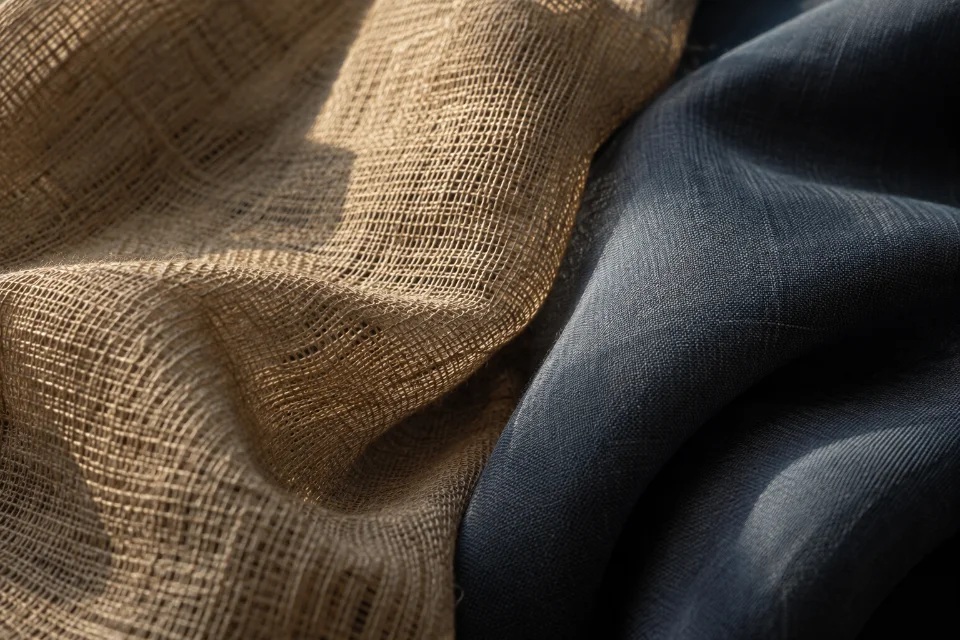
Construction details, working cloth and the finished silhouette. Each view draws attention to a different part of the same conversation.

What to notice at a fitting
Start with comfort and proportion before deciding on the smaller details.
Shoulder balance
Check the shoulder line with your arms resting naturally. Describe how it feels as well as how it looks; photographs alone cannot tell the tailor where you feel restricted.
Detail 02
Lapel & chest
Look at the front with the jacket fastened as intended. The lapel should relate naturally to the chest, without asking you to hold an artificial posture.
Detail 03
Trouser movement
Sit down and take a few steps. Consider the rise and thigh room together, then judge the hem with the shoes you will actually wear.
From first conversation to first wear
Four useful moments in the making of a suit. The number and timing of fittings depend on the garment.
Begin with your day
Describe where the suit will go: a working week, a wedding or occasional evenings. Mention travel, air-conditioned rooms and how formal you like to feel. These details give the tailor a practical starting point.
Handle the cloth
See the fabric unfolded and against your shirt. Ask how its weight and texture suit the intended use. A small swatch can make a pattern seem busier than it will look across a whole jacket.
Use the fitting
Wear familiar shoes and move naturally. Explain discomfort clearly and let the tailor assess the cause. Several small adjustments may work together; avoid judging each one as an isolated alteration.
Let it join your life
Try the finished suit with the rest of your outfit before its first occasion. Check pocket contents, fastening and trouser length. Keep a note of anything you want to discuss at your next visit.
The work inside. The life outside.
Scroll to move between internal construction and a suit in wear. These editorial views illustrate two sides of tailoring, rather than a before-and-after record of one garment.